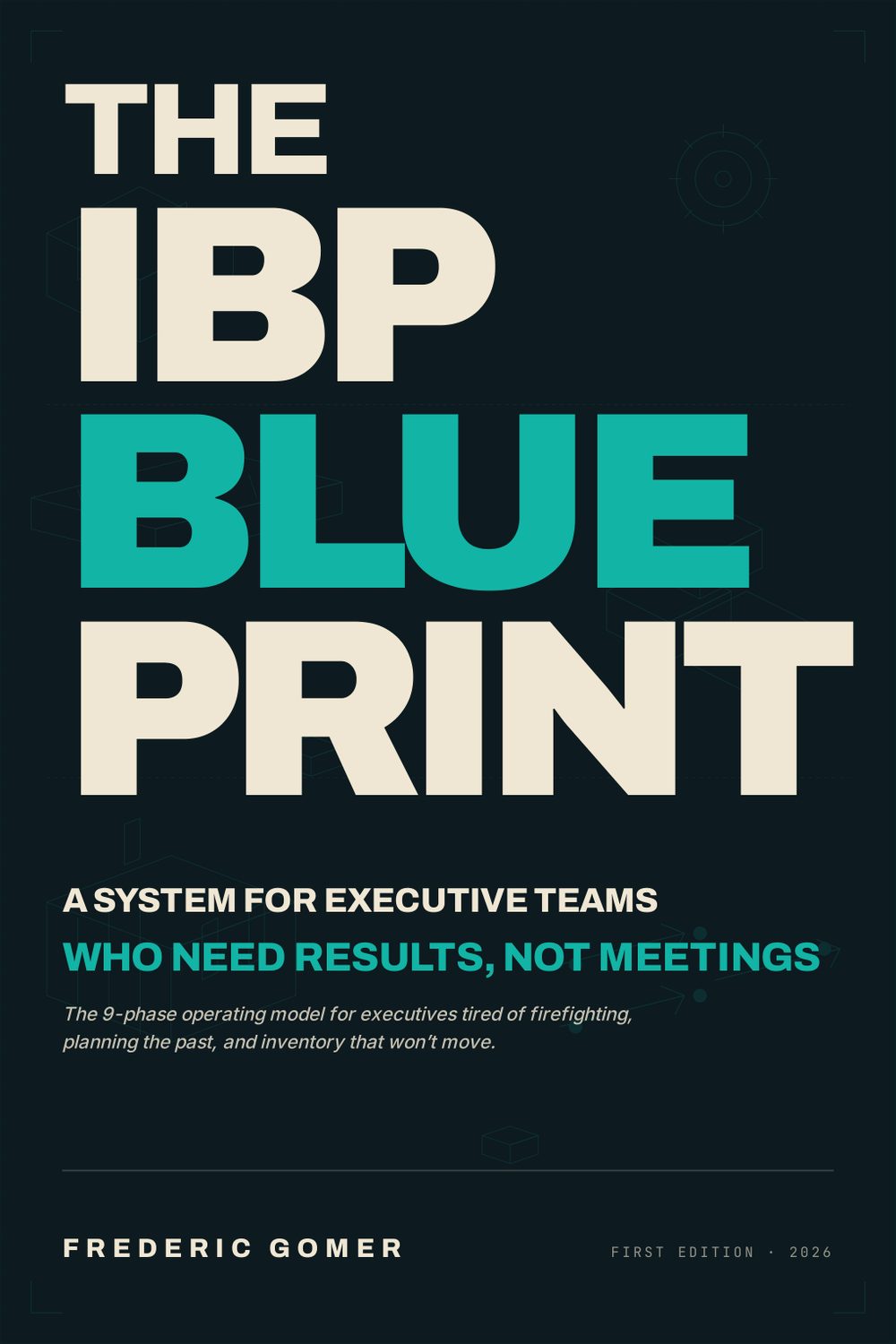
A practical guide for leadership teams who are fed up with planning that’s just for show. For the CEO stuck handling daily crises, the COO sitting on stock that won’t sell, the CFO working with numbers that don’t match, and the VP of Supply Chain rushing emergency orders while the reports say everything is fine.
The ten phrases that give it away, the five numbers that never reconcile, and the phase you are actually in.
Kill the real forecast running beside the plan, and give every trade-off one named owner with a date.
Executive IBP, pre-exec, weekly S&OE, the frozen zone and the decision log that makes the handover real.
Where the cash is actually stuck, which inventory is protecting a bad decision, and the order to release it in.
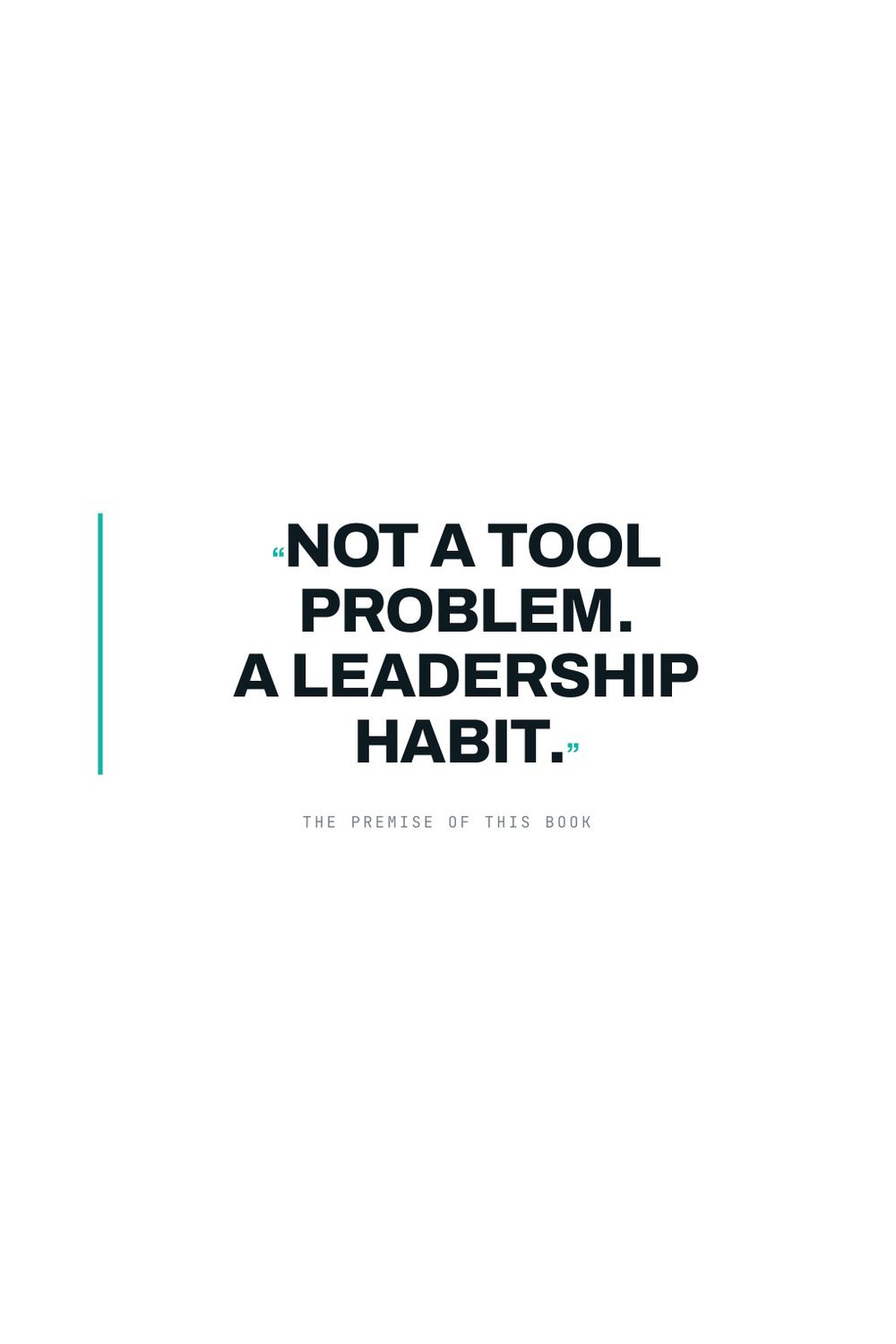
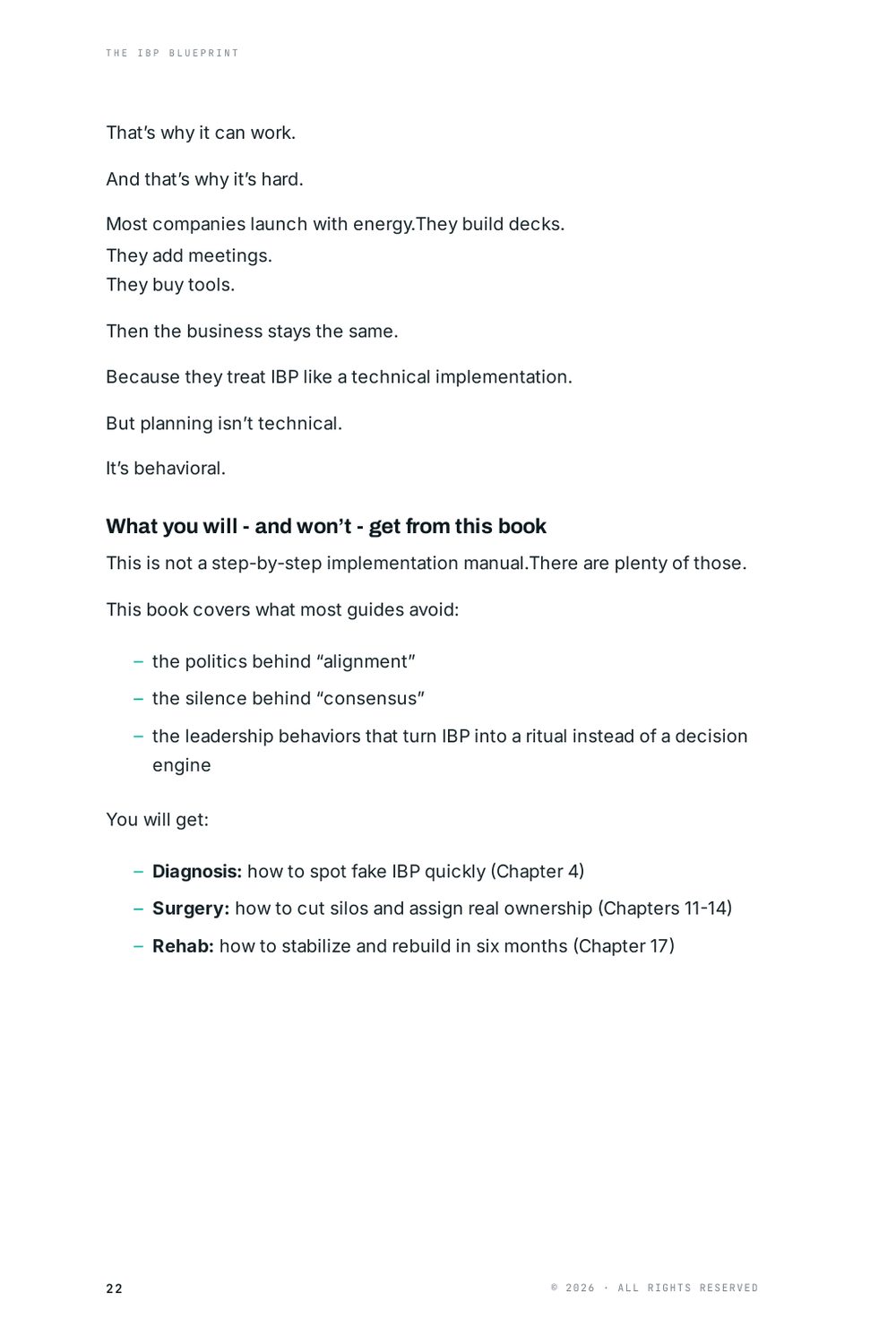
IBP is not a tool problem. Chapter 11 is about the mirage you are about to buy.
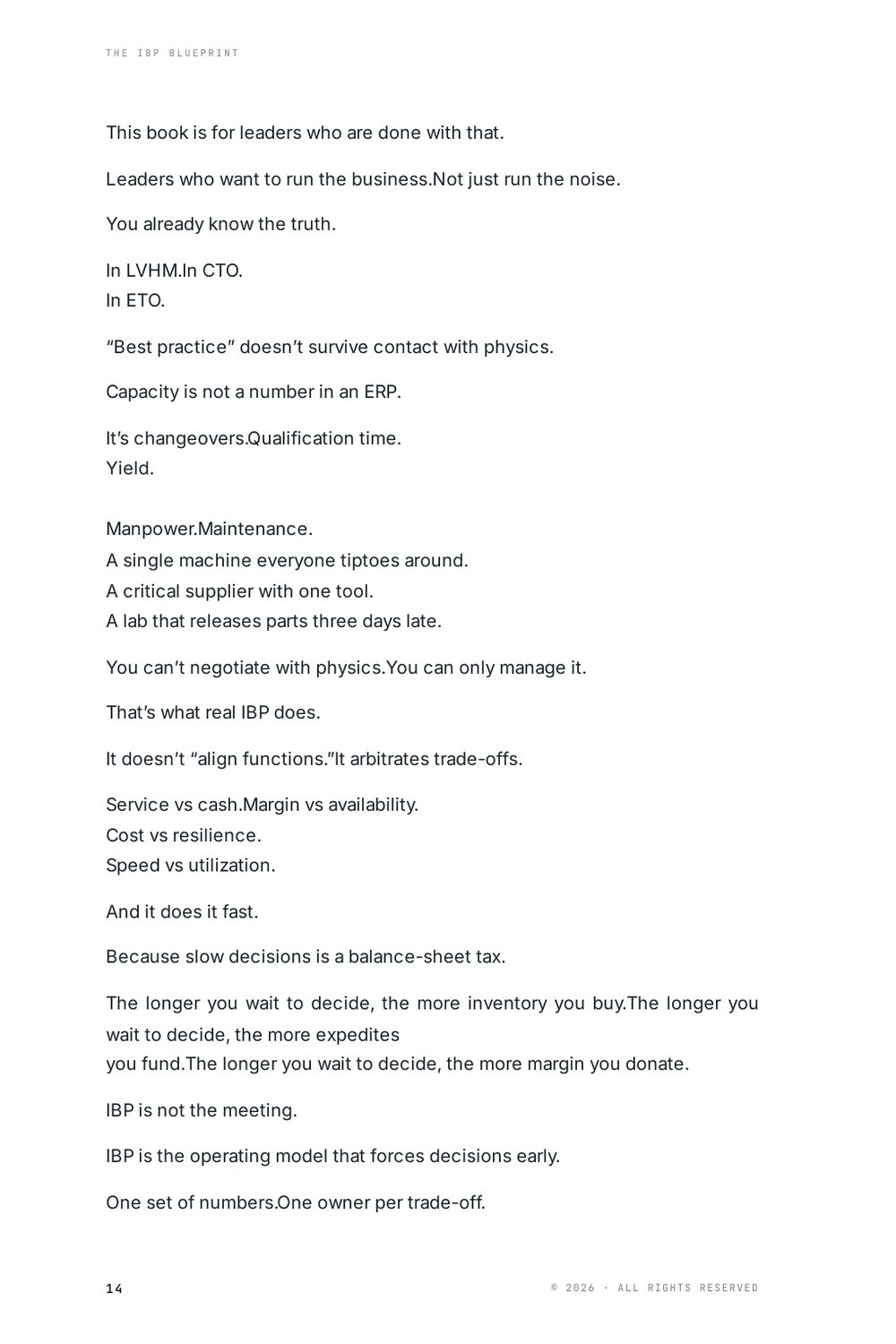
Best practice does not survive contact with physics. The book works from the bottleneck, not from a template.
This book removes hiding places. Every decision gets an owner, a cost and an audit date.
It is for the people who are accountable for the outcome: the CEO or division president, the COO, the VP Supply Chain, and the CFO who is tired of two sets of numbers.
"They had just signed with a leading IBP tool. The reporting still ran on Excel."
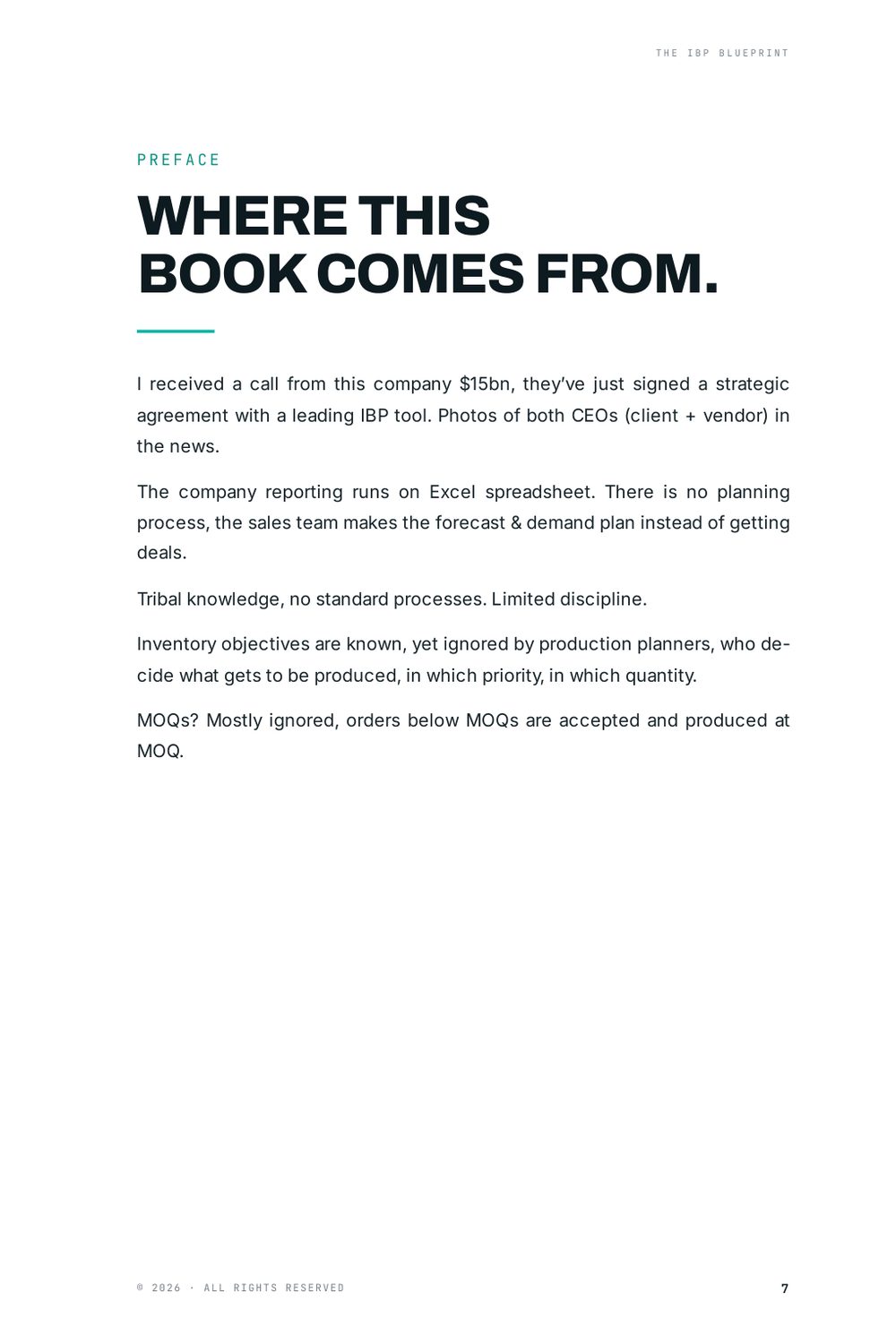
A $15bn company signs a strategic agreement with a leading IBP provider.
Photos of both CEOs in the news, the client and the vendor.
The company reporting runs on an Excel spreadsheet.
There is no planning process.
The sales team makes the forecast and the demand plan instead of getting deals.
Tribal knowledge, no standard processes, limited discipline.
Inventory objectives are known, and ignored by the production planners, who decide what gets produced, in which priority, in which quantity.
MOQs are mostly ignored. Orders below MOQ are accepted, and produced at MOQ.
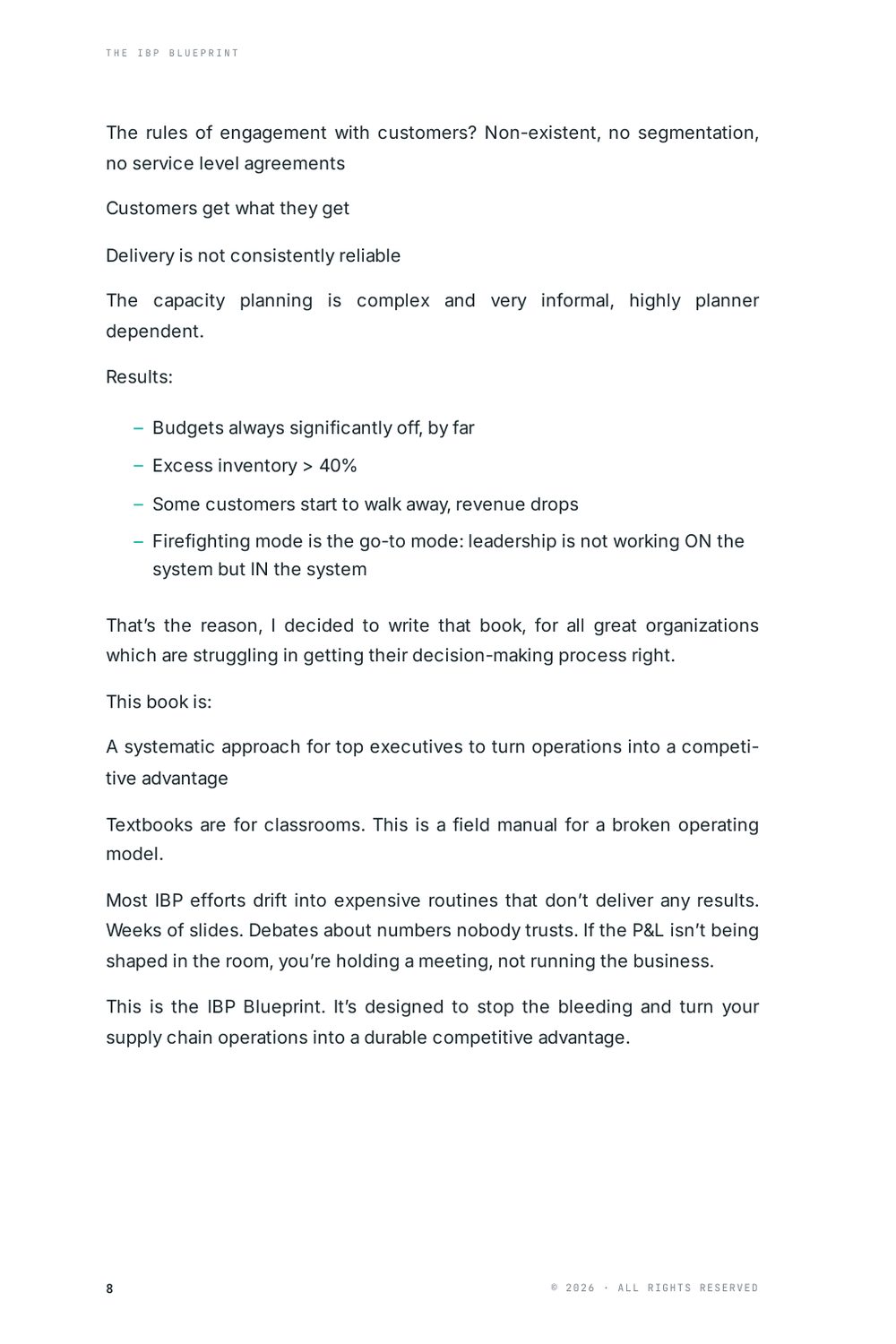
The rules of engagement with customers are non-existent: no segmentation, no service levels.
Customers get what they get.
Delivery is not consistently reliable.
Capacity planning is complex, informal, and highly planner dependent.
Then the results, in the words they used with me.
Budgets always significantly off, by far.
Excess inventory above forty percent.
Firefighting becomes the operating mode: leadership is not working on the system, it is working in the system, every day, all day.
Weeks of slides. Debates about numbers nobody trusts. A P&L never shaped in the room.
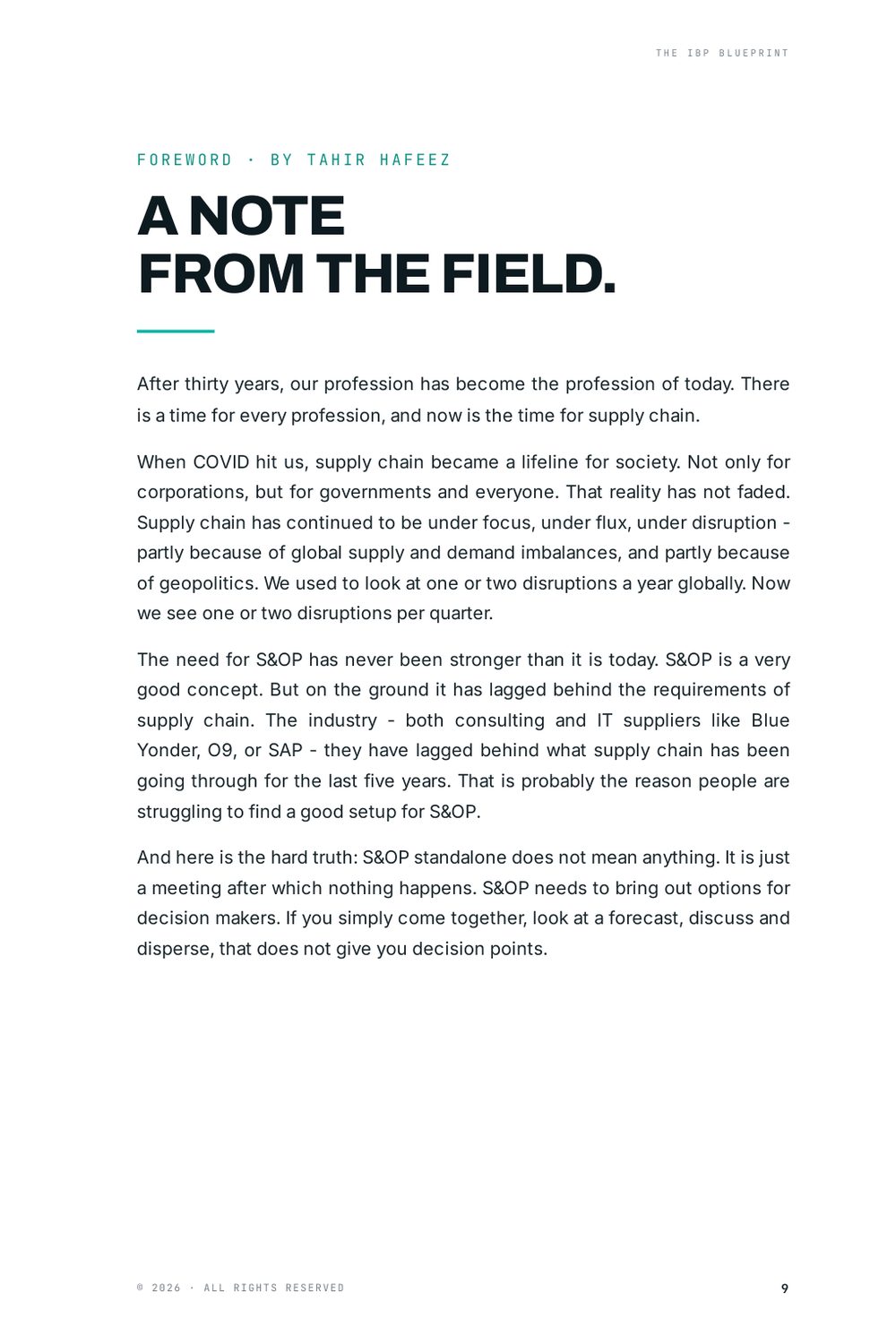
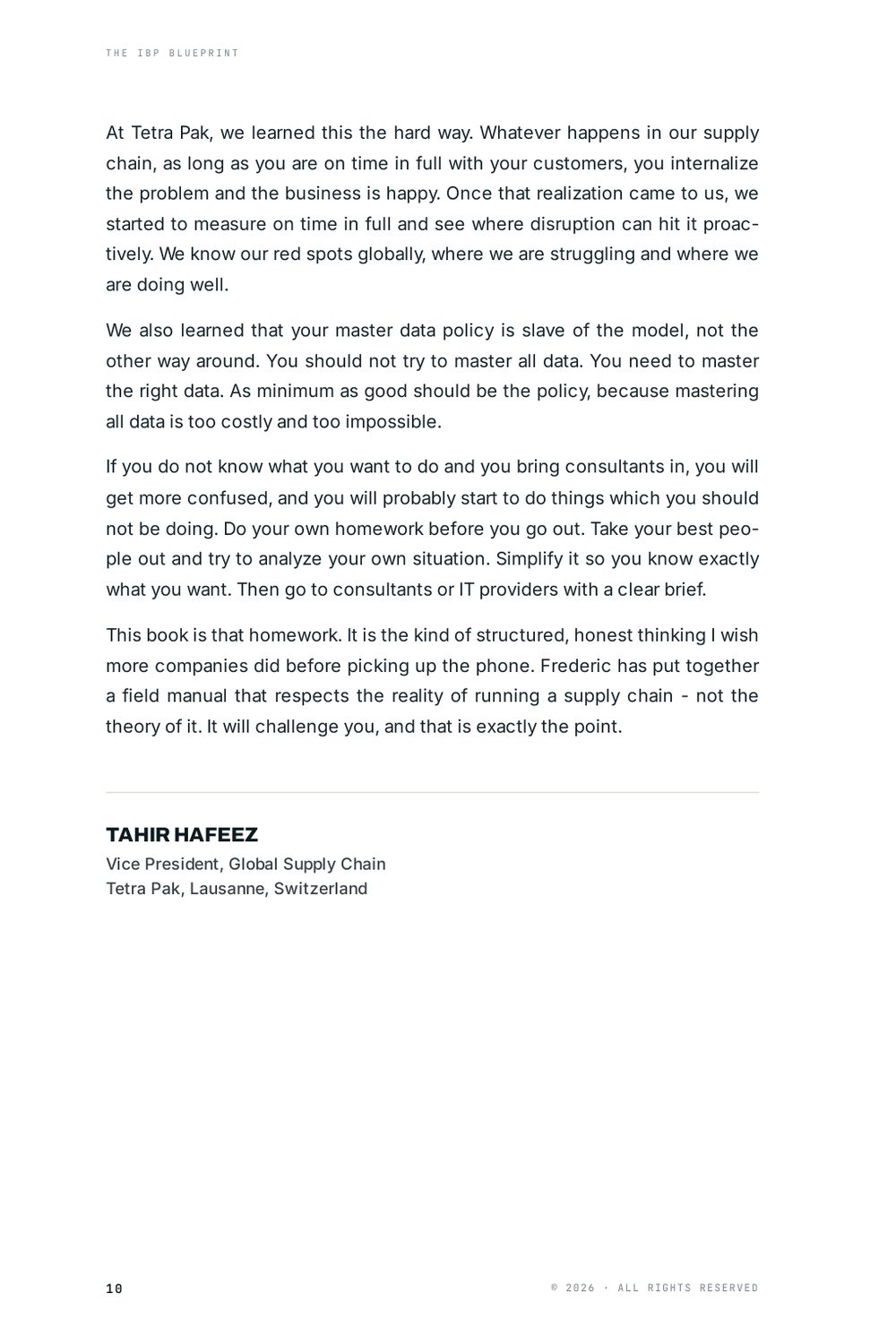
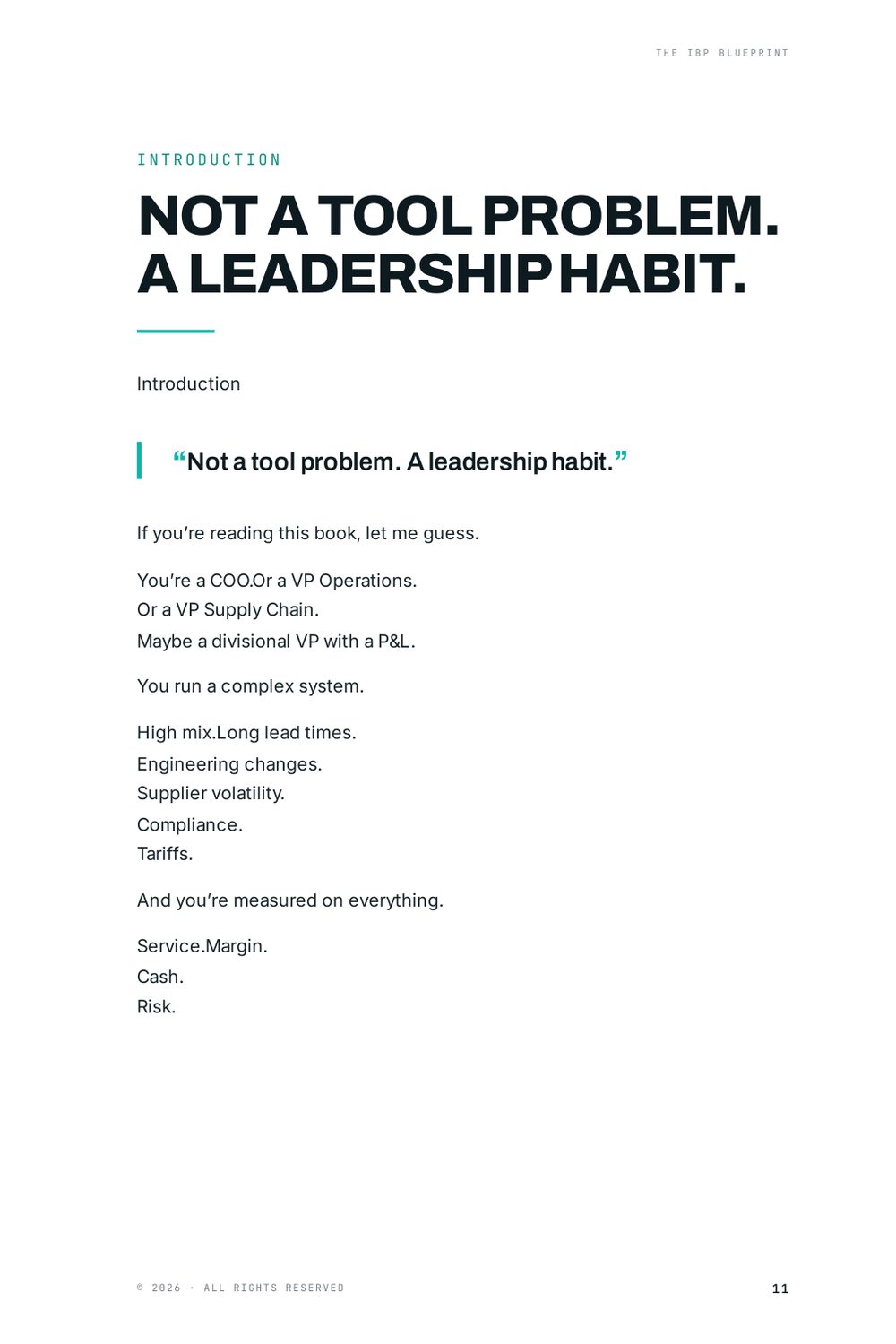
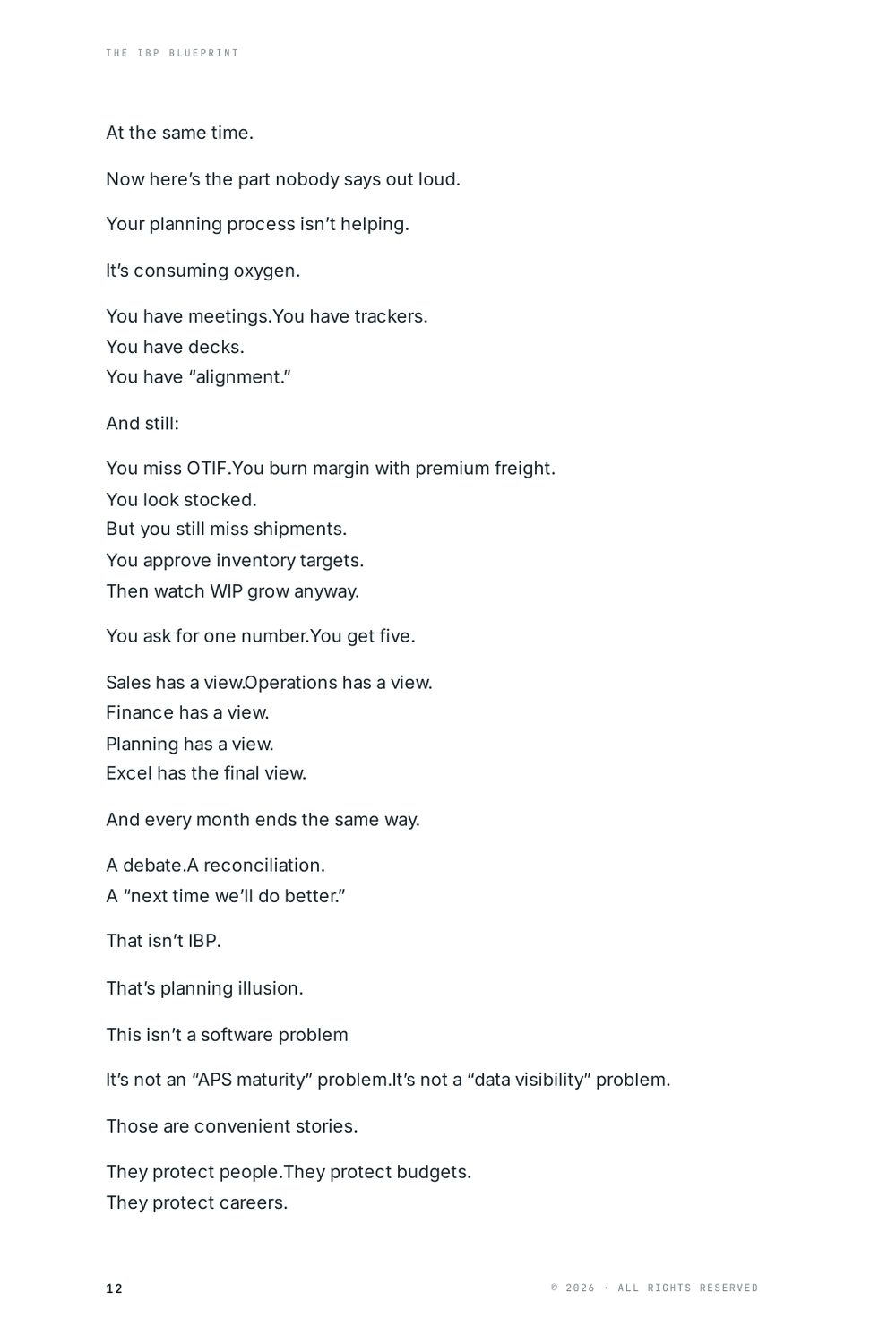
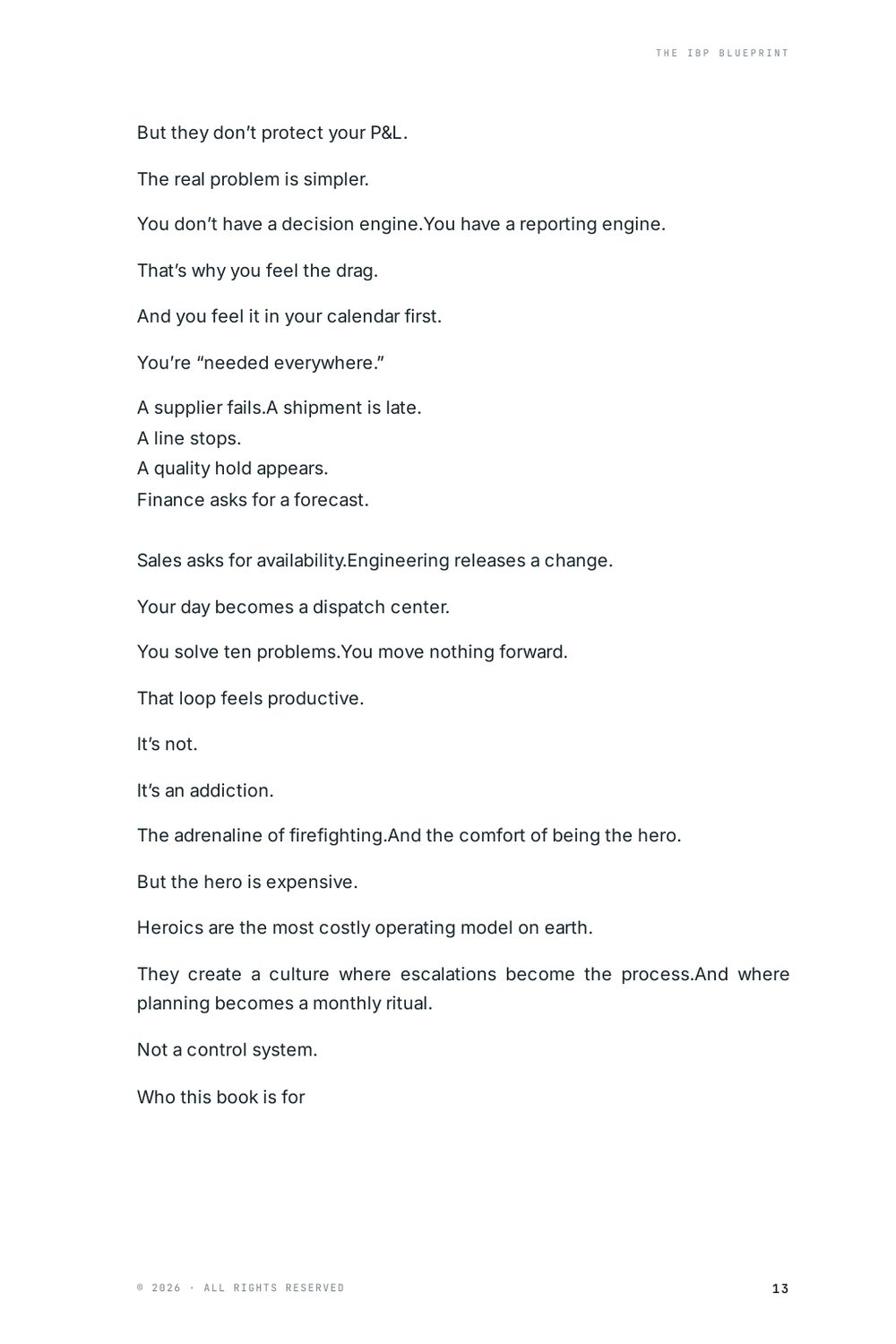
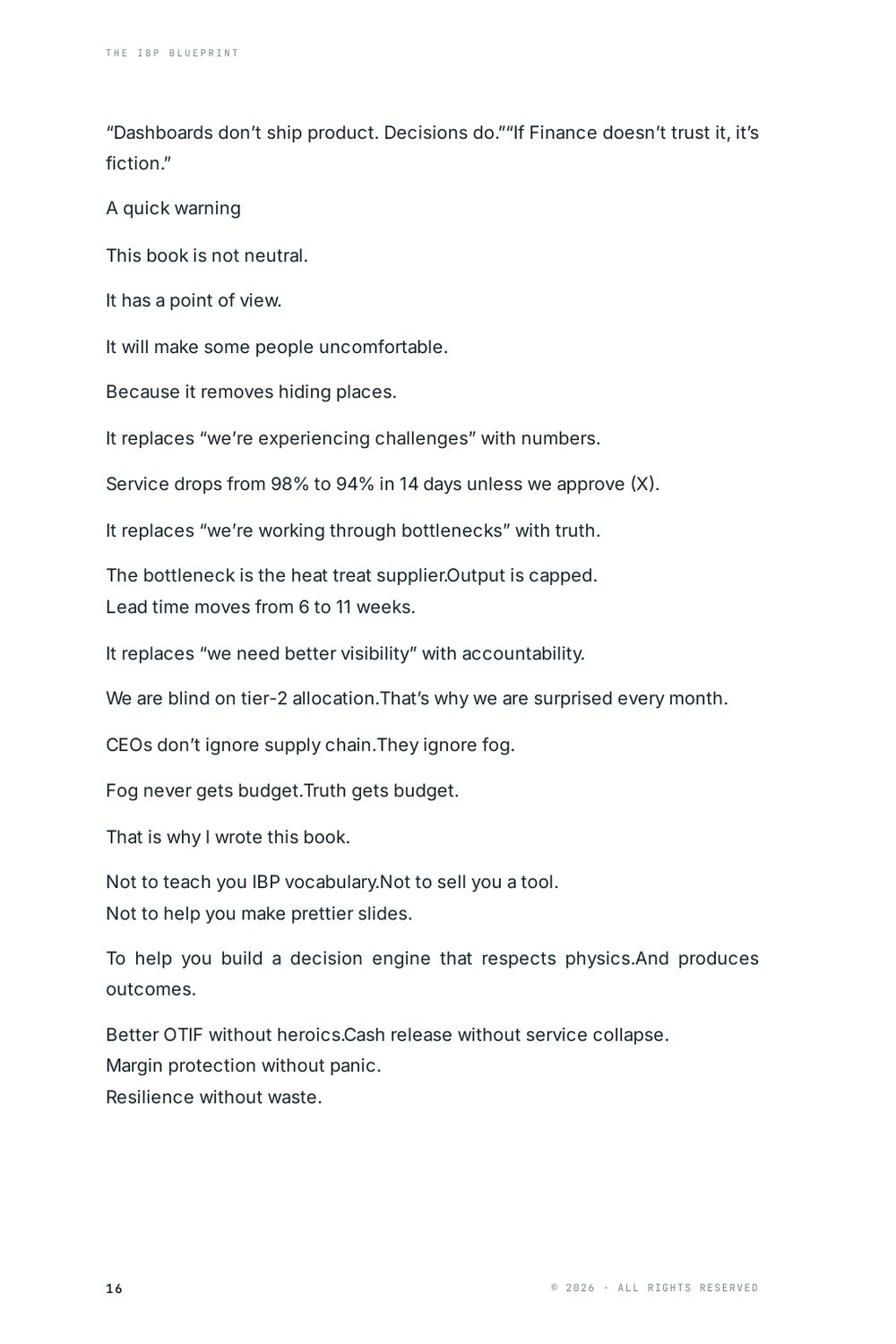
That is the reason I decided to write this book.
Get the book →Two pages at a time, the way the book opens. Drag a page or use the arrows, the arrow keys, or a swipe. Open it full screen to read.


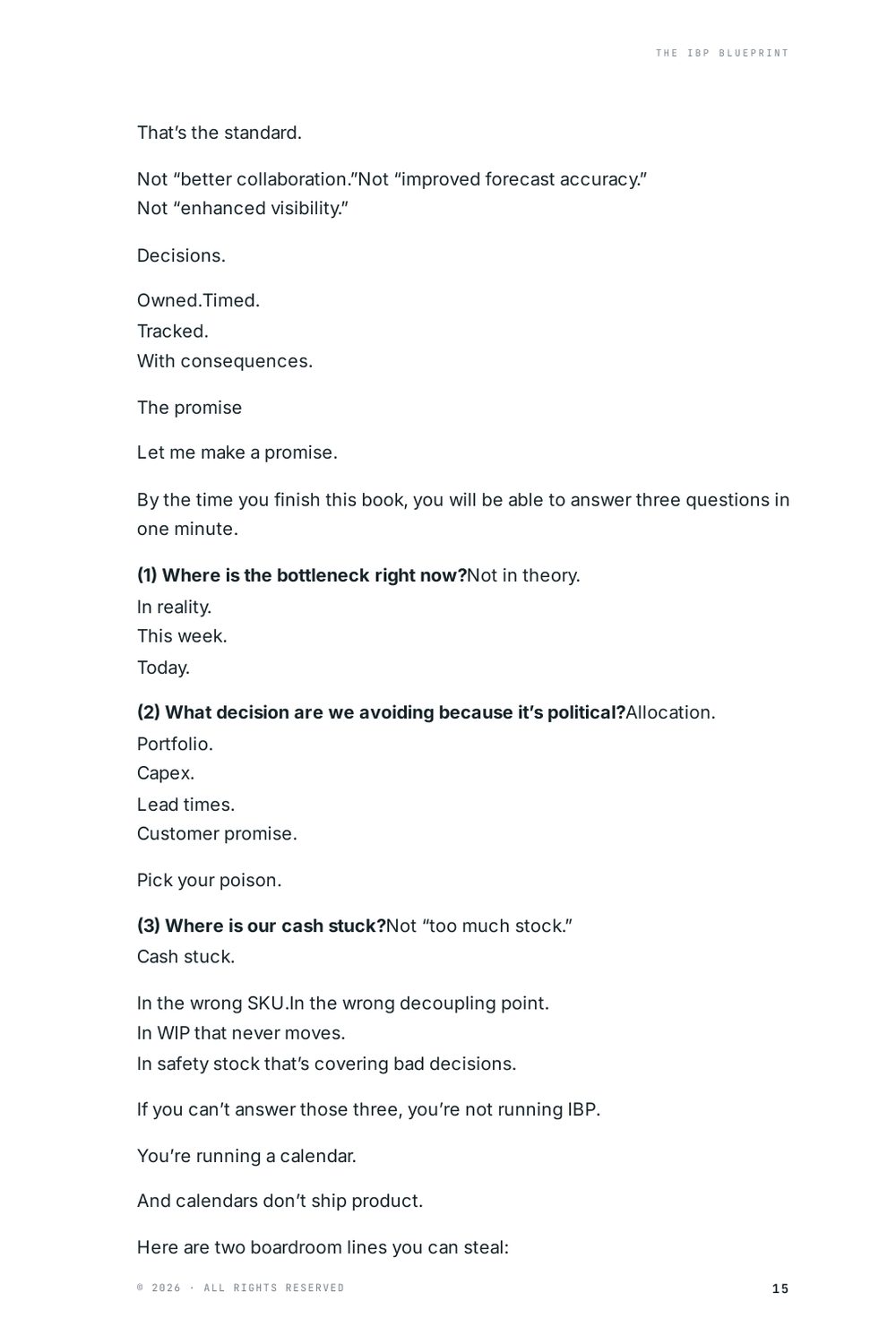
Not in theory. Not last quarter. Today.
Allocation. Portfolio. Capex. The customer promise.
Not "too much stock". In the wrong SKU, the wrong decoupling point, the work in progress that never moves.
Demand policy, supply policy, capacity, portfolio, the financial commit. The room where trade-offs are arbitrated, not reported.
Where the options are built and priced before they reach the executive room: load, mix, allocation, capex, customer promise.
The order book against available supply, the allocation rules already decided in IBP, the exceptions that do not need a strategy.
The schedule, the sequence, the escalation. Guarded by a frozen zone, or the week rebuilds itself every Monday morning.
"If expedite spend is flat or rising, S&OE is documenting fires, not preventing them."
The IBP Blueprint, chapter 17b
Two rooms, two teams, one handover point: the decision log. IBP sets the policy, S&OE runs it, and when it cannot act inside policy it escalates with a recommendation, a cost and a deadline. When the same people run both, the urgent always crowds out the important, and the eighteen month horizon shrinks to three.
The book opens on a company that had just bought the tool, and on what it was still paying. These are its numbers, not a forecast.
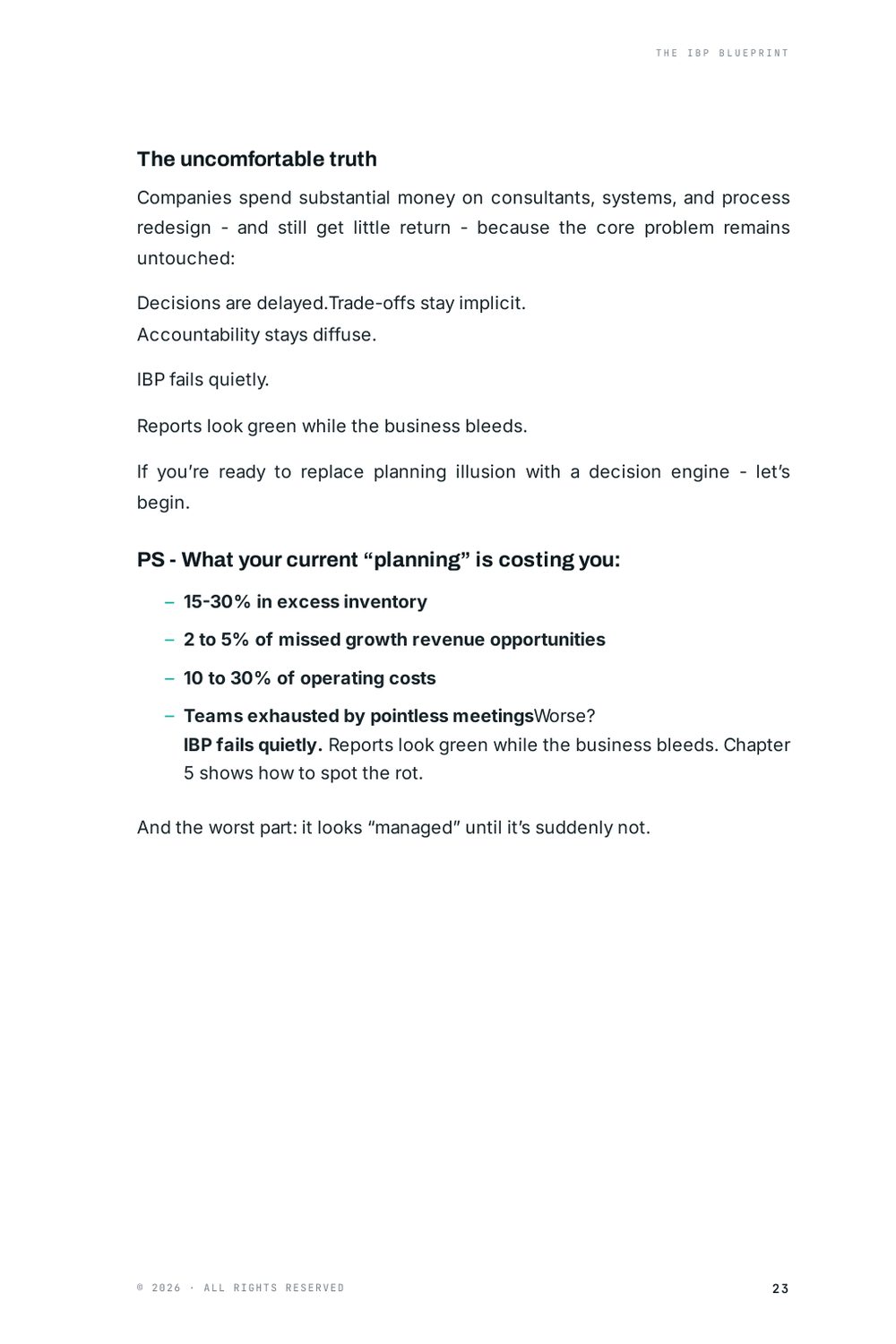
Get the book →of inventory value tied up in excess: the wrong SKU, the wrong decoupling point, safety stock that is covering a bad decision. It reads as protection on the balance sheet.
of operating cost going to premium freight, expedites, rework and the monthly reconciliation nobody puts a price on. Slow decisions are a balance sheet tax.
of growth revenue missed while a trade-off waits for the next steering committee. Nobody writes that line down.
Figures from the author’s note in The IBP Blueprint. Chapter 1 is the full arithmetic of negative ROI.
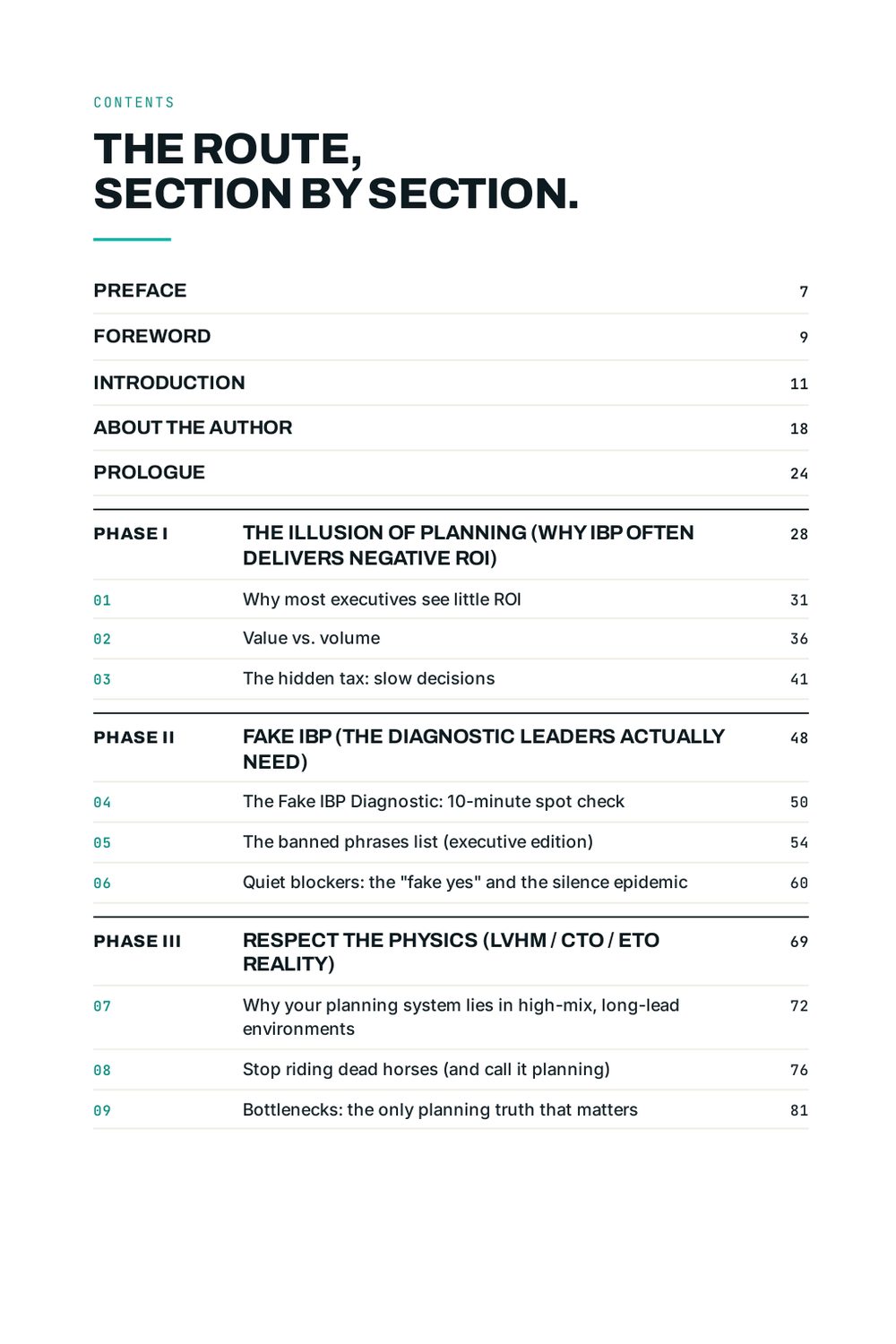
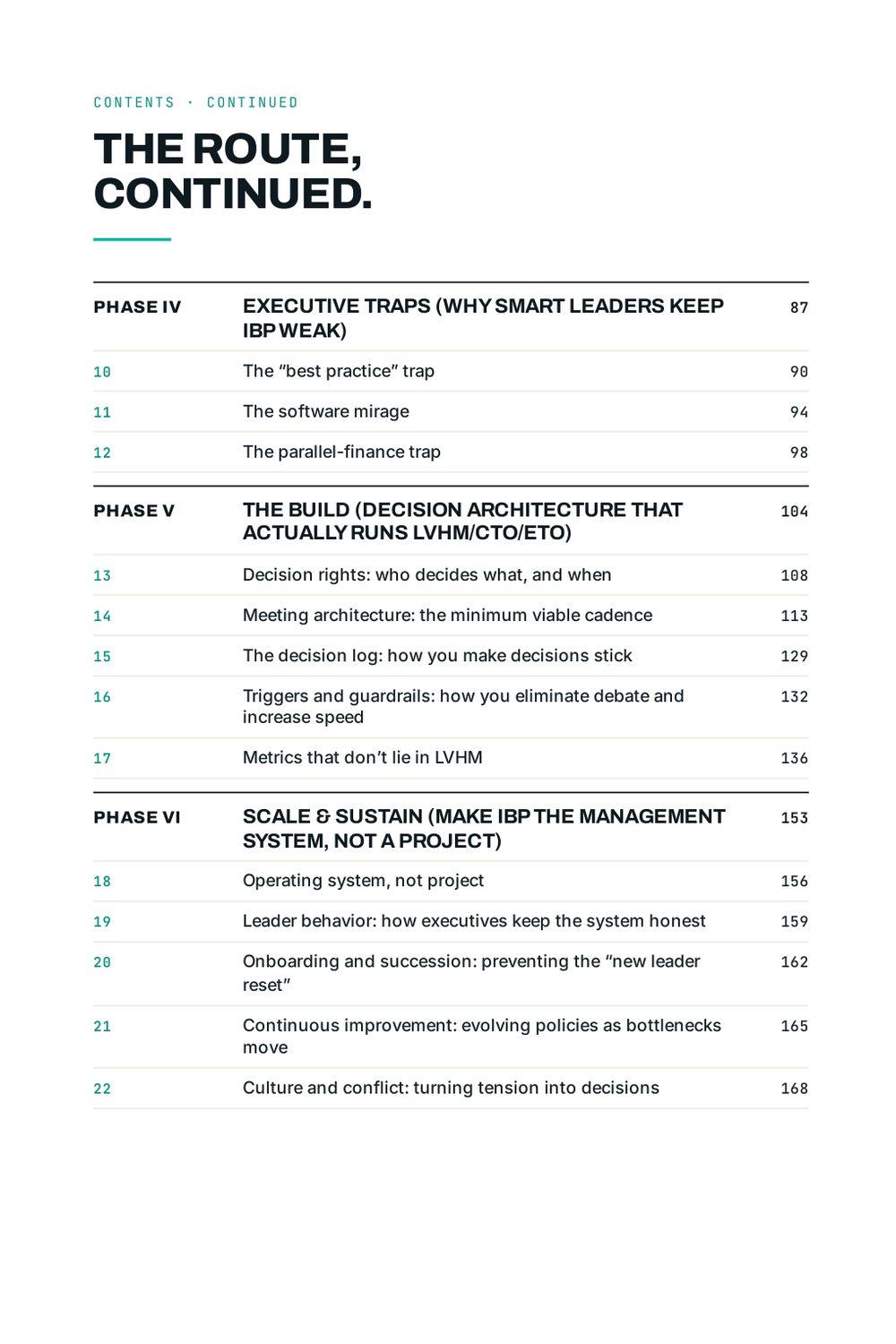
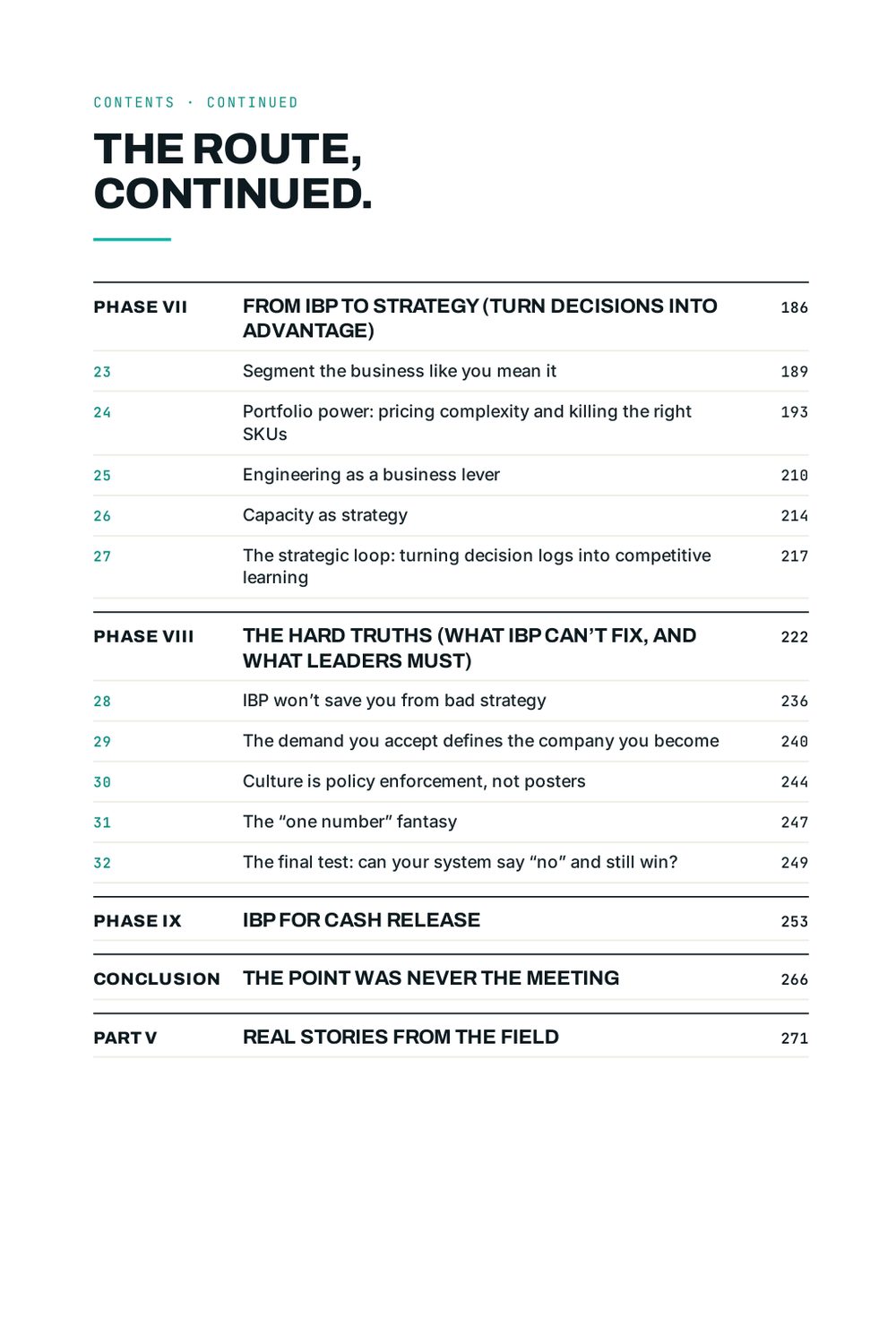
From the fake IBP test to the cash release, phase by phase, with the questions that tell you where you actually are.
One owner per trade-off, written down, and what happens when the same issue comes back a third time.
Executive IBP at twelve to eighteen months, pre-exec below it, and the weekly S&OE that keeps the month honest.
Owner, horizon, guardrails, expected impact, assumptions, audit date. The template is in the book, chapter fifteen.
Pre-agreed thresholds that end the same debate, and a price tag on every request to break policy.
Schedule adherence, exceptions inside the frozen zone, escalation quality, expedite spend. No more than four.
Every chapter ends with a What you do Monday list, thirty-two of them, so the book can be handed to a planner on Sunday night and run on Monday morning.
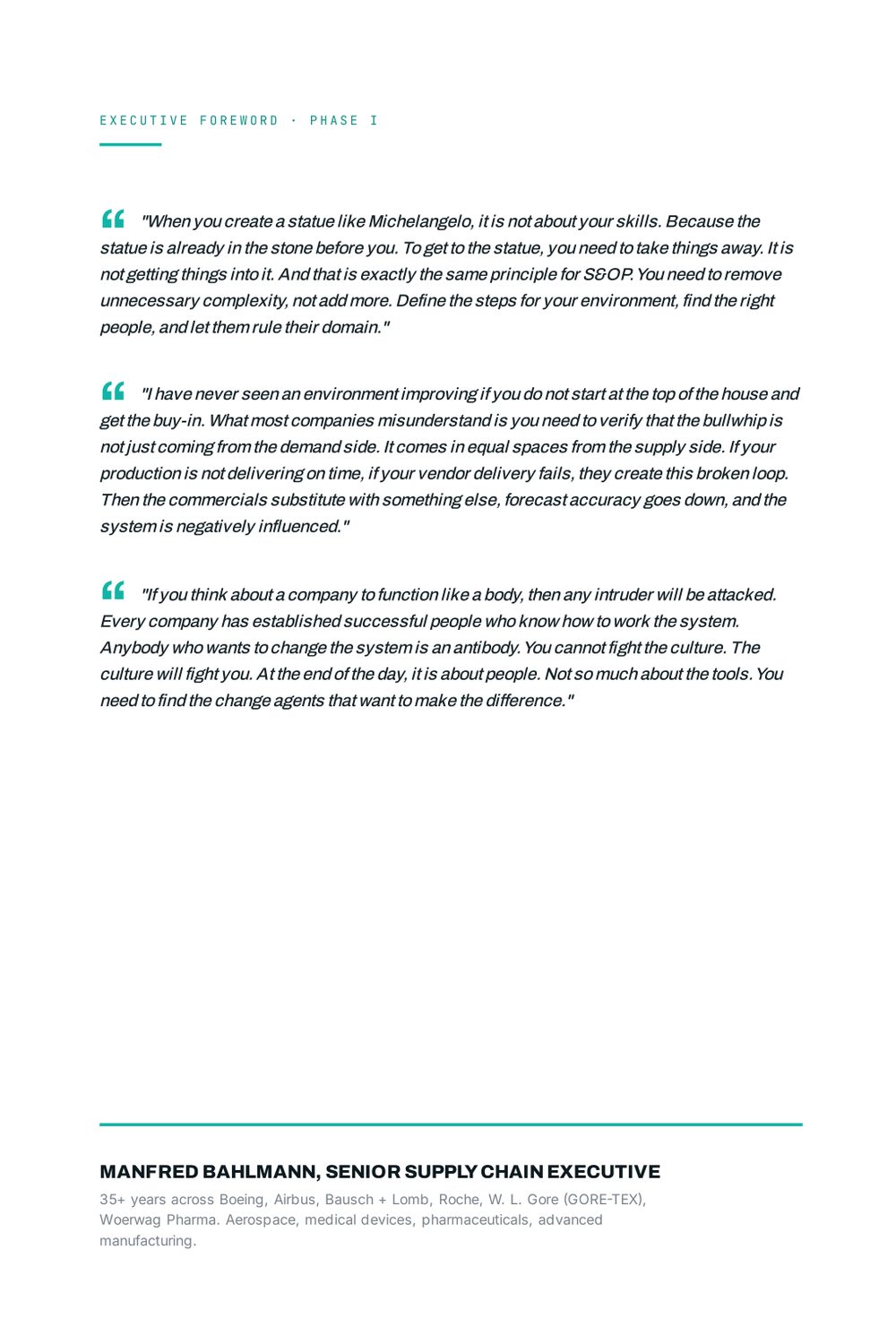
Eight operators wrote the phase forewords to this book, one per phase. These are their words.
"When I started, only 5 percent of decisions were made in executive S&OP. Within a year, we moved that to 80 percent. Not by adding slides or meetings - by shifting management from firefighting discussions to long-term planning."
"The short-term magnet was too strong. You need to split it to protect the strategic discussion. We created S&OE to handle the first three months separately."
"Different teams for IBP and S&OE with a formal handover point. If the same people handle both, the urgent always crowds out the important."
"A good S&OP is eighty percent people and twenty percent process. You need clear decision rights for each forum and a clear understanding of how to escalate."
"You need to remove unnecessary complexity, not add more. Define the steps for your environment, find the right people, and let them rule their domain."
"Process without people commitment produces nothing."
"Without clean master data, all your planning is built on sand."
"This is not my process, this is the business's process."
One evening to read.
One quarter to run differently.
Nine phases. Thirty-two chapters. Four real cases from the field, including the one where a controller went on maternity leave and the whole cadence died with her.
Get the book →